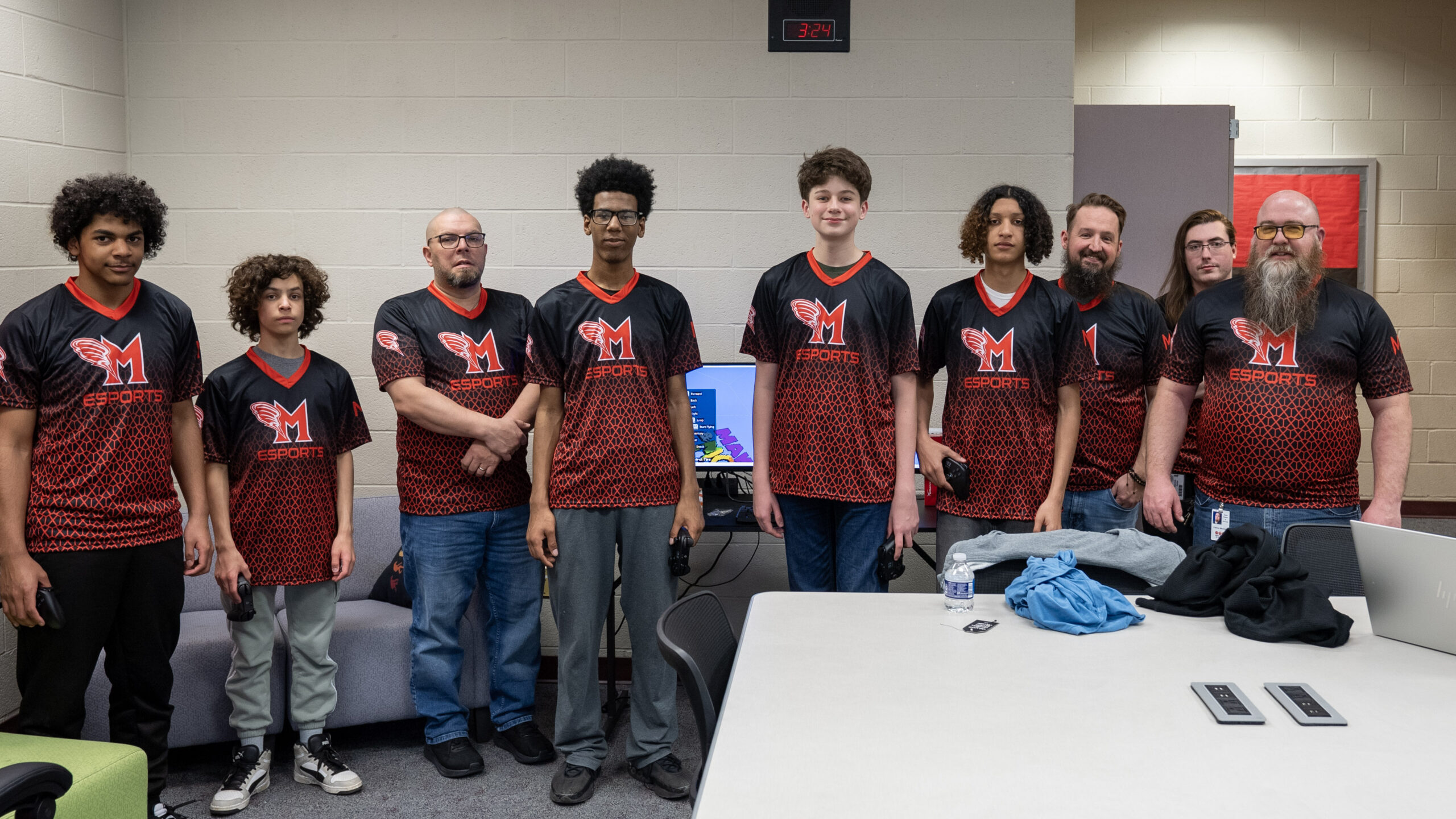
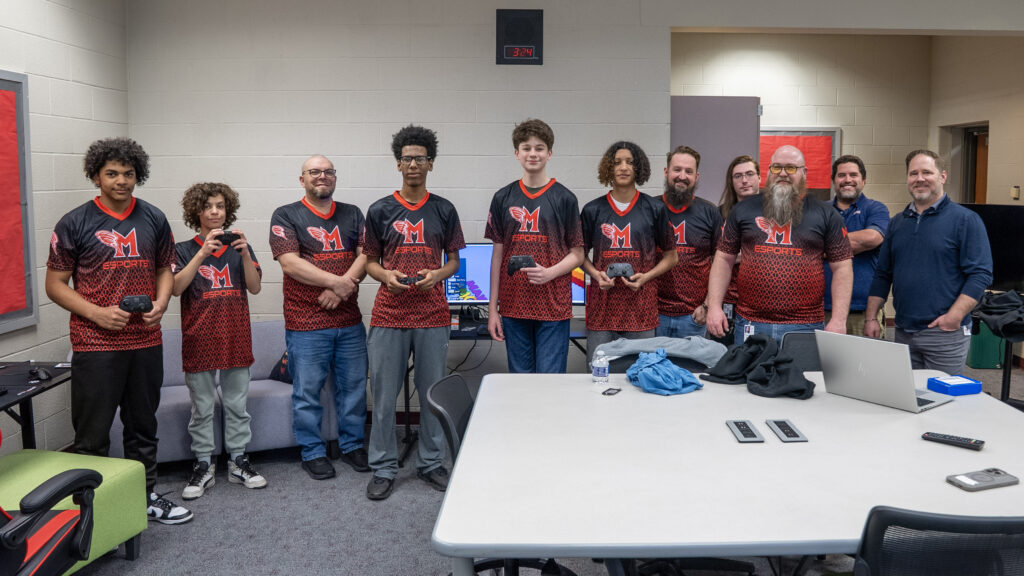
Not every team wears cleats. Some log in. What took place inside McCaskey High School didn’t look like a traditional signing day or a packed gym. There were no bleachers, no scoreboard, no buzzer. No crowd counting down the final seconds.
Instead, there was a different kind of energy. Rows of screens flickered to life. Students leaned forward in their chairs. Conversations moved between strategy and laughter. And then, one by one, jerseys were handed out. Not just shirts, but something that signaled this was real now.
For the first time, something that had been building behind the scenes for years had a visible form.
The McCaskey eSports team had arrived.
For AV Supervisor Sam Kochenberger and Service Desk Supervisor Patrick McGary, this moment has been years in the making. What started as an idea, followed by conferences, research, and ongoing conversations with students and educators across the country, has grown into something tangible inside McCaskey. The goal was to create a space for students who weren’t already connected to school through traditional activities. Build something that meets students where they are, not where we expect them to be.
And then came the challenge.
Even as budget constraints shifted what was possible, the work didn’t stop. Teacher stipends that would normally sustain a club like this were no longer available. For many programs, that would have been the end of the conversation.
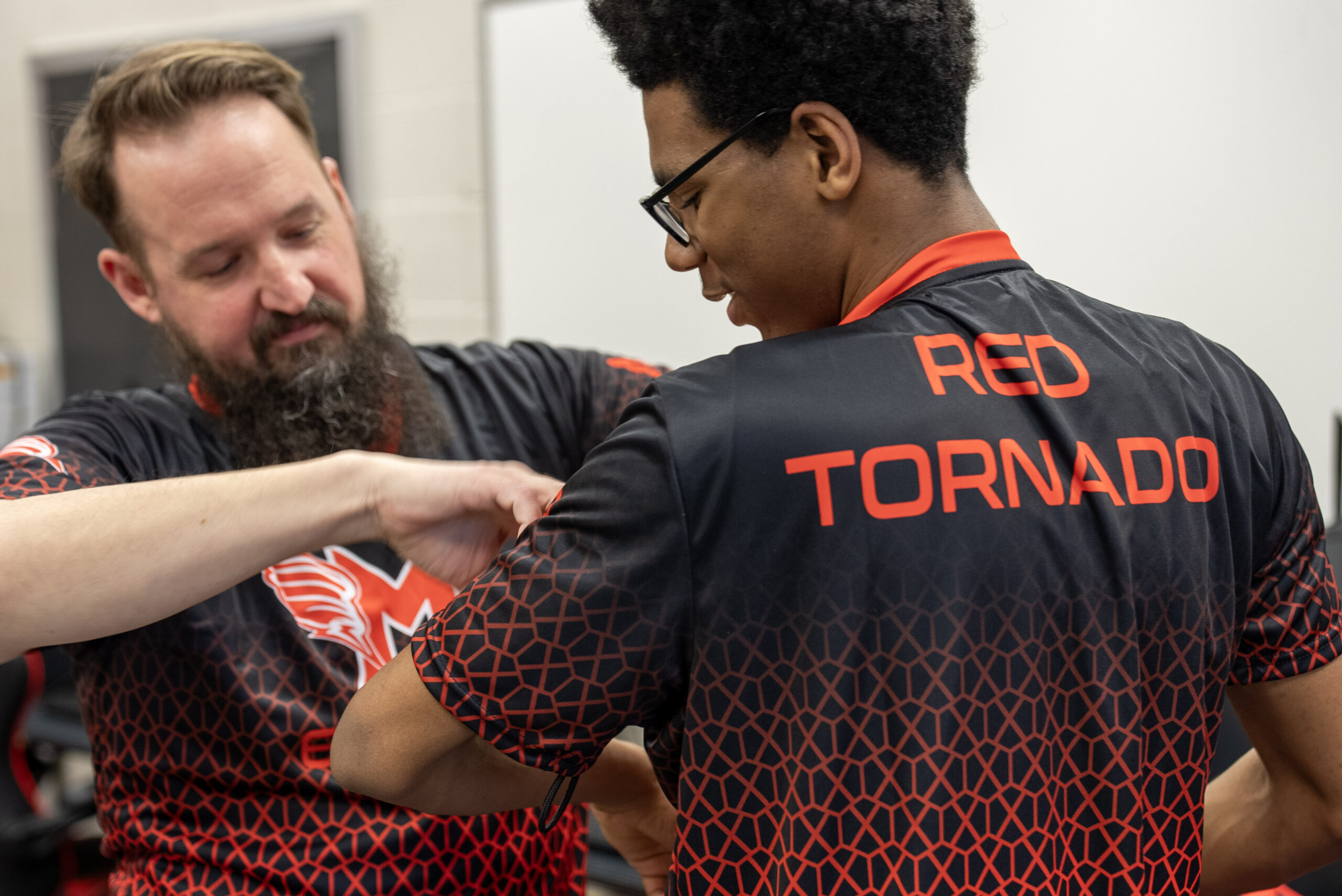
Kochenberger and McGary stepped in, not just to maintain what had been started, but to carry it forward. They brought in additional members of the IT team, including technicians Shaun Freed and Derek Hollar, who were willing to invest their time in making sure this space stayed open for students.
What emerged wasn’t just a club being preserved. It was a community being built.
The jerseys made it visible. Before students ever compete, before the team formally enters league play, there was this moment. Students helped design them. They voted on options. They shaped what this team would look like before it even fully existed.
And when they finally put them on, something shifted.
For many of these students, this was the first time they had something that marked them as part of a team.
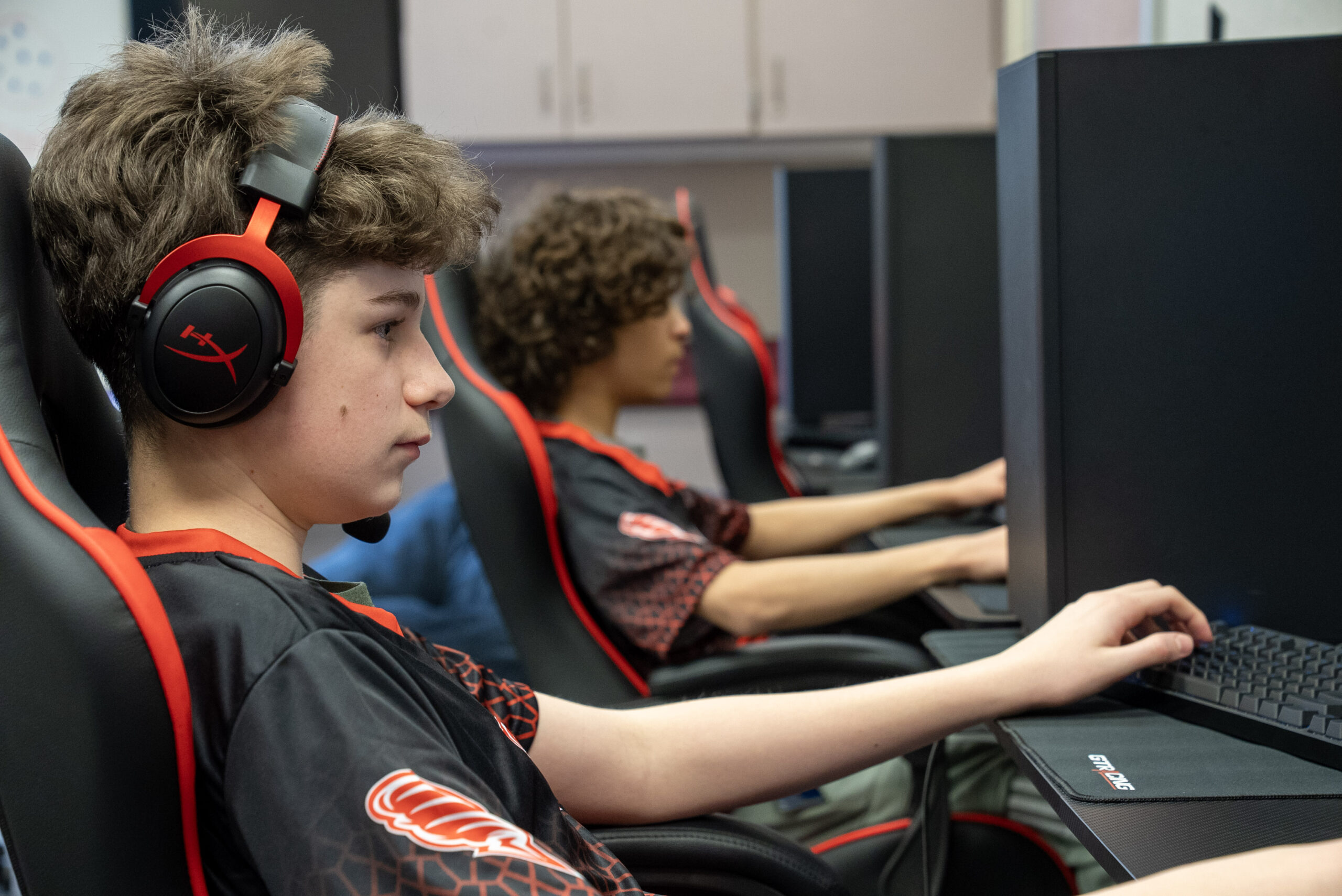
“These are students who have not been on a sports team, who have not participated in your traditional things that a high school student does,” Kochenberger shared.
That distinction matters.
Because school activities have historically rewarded a narrow definition of participation. eSports expands that definition, creating space for students who may have felt on the margins of school culture to step into something that fits.
Inside that room, participation looks different. Students from grades 9 through 12 come together, many from different backgrounds, interests, and experiences. And yet, what unfolds is something unified.
What stands out first is how naturally students work together.
There is no need to teach collaboration in a traditional sense. It’s already happening. Students communicate constantly, sometimes out loud, sometimes through quick glances and shared understanding. They adapt in real time. They support each other without being asked.
“It was a master class on collaboration,” Kochenberger said.
What’s happening in that space reflects something deeper than gameplay.
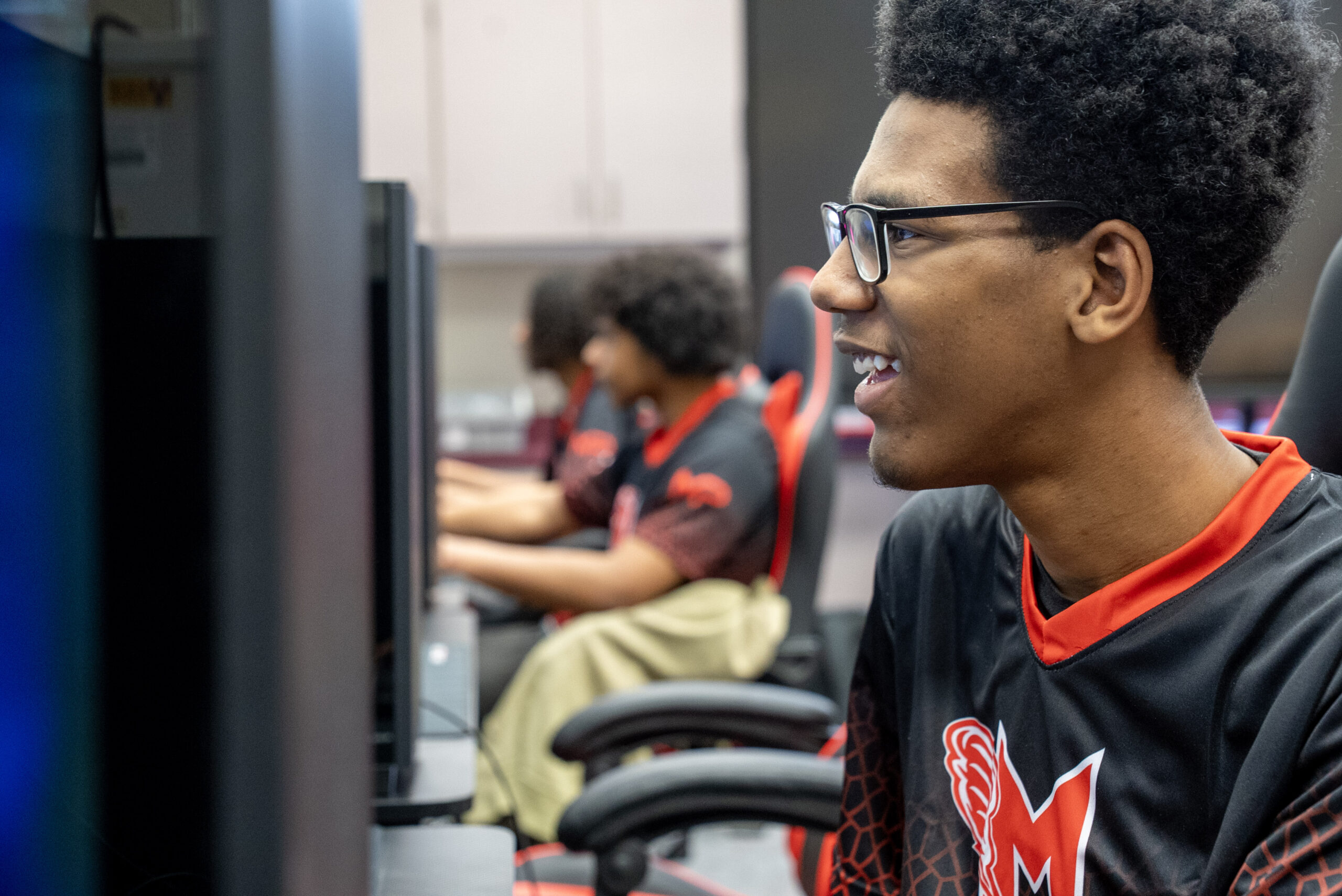
Students are practicing communication in ways that feel real. They are learning how to navigate group dynamics, how to manage frustration, how to recover from mistakes, and how to support each other through it. They are building trust.
These are the same skills that carry into classrooms, into workplaces, and into life beyond school. And they are happening in a space students chose to be in.
The work reflects a broader shift in how schools think about engagement.
Opportunities don’t all look the same, and they shouldn’t. Students come with different interests, strengths, and ways of connecting. Creating space for those differences is part of how schools grow stronger.
eSports meets students in a space they already understand, then builds outward from there into communication, collaboration, and confidence. There are also pathways connected to this that extend beyond high school.
eSports is a growing field. Colleges and universities are actively recruiting players. Scholarships exist, many of them still going unused. For some students, this opens doors they may not have previously considered. But what makes this program meaningful isn’t dependent on that outcome.
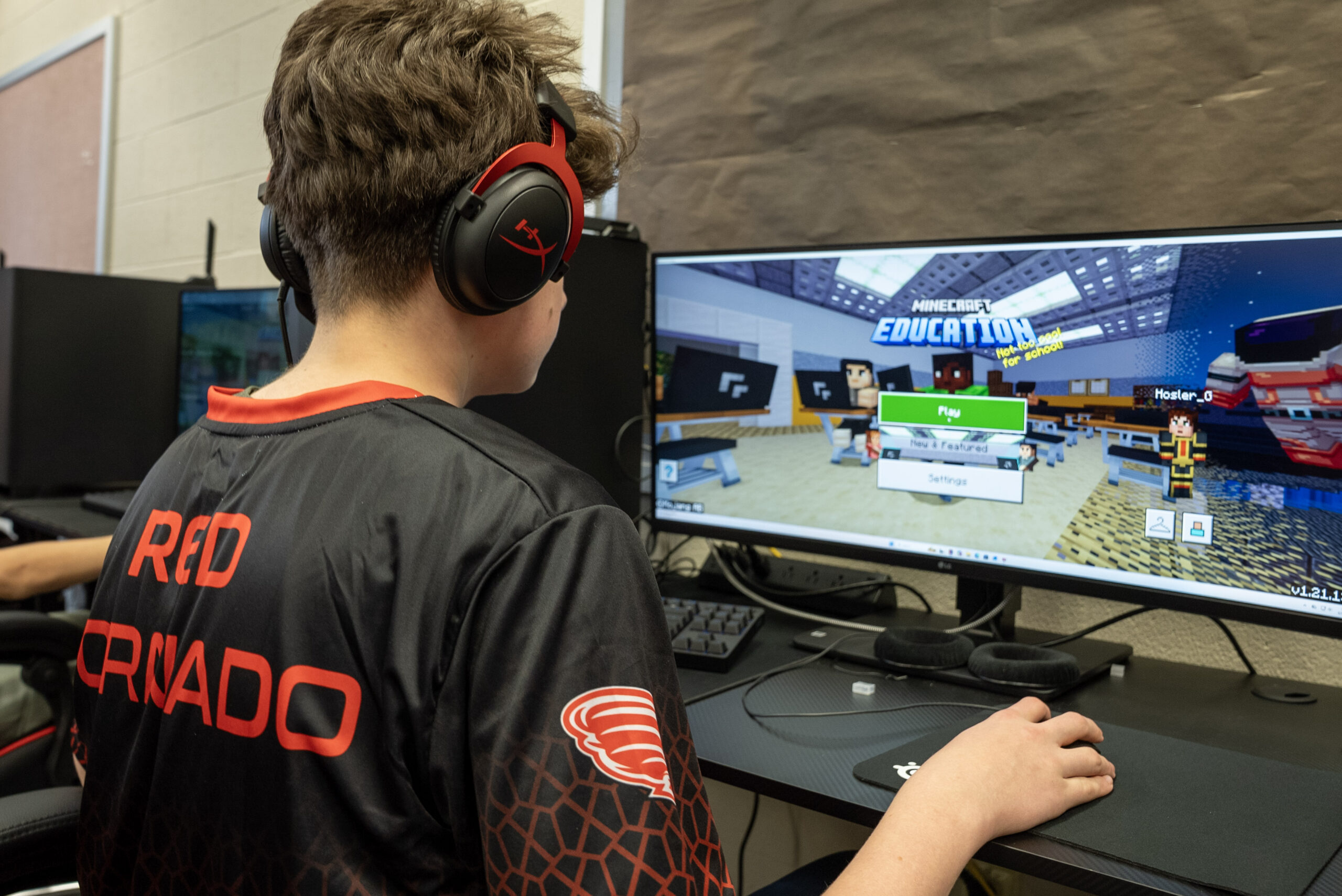
Because for every student thinking about competition or scholarships, there is another student who simply needs a place to go after school. “I personally want for the students just a safe place to be,” Kochenberger said.
That goal shapes everything. A room where students can stay, where they are supported, where they can be themselves without having to adjust who they are to fit expectations. A space where adults are present not just to supervise, but to build relationships.
That kind of consistency changes how students show up and how they see themselves.
There is also a longer vision taking form. This program isn’t isolated to one group of students. It’spart of a pathway that is beginning to take shape across the district. Elementary students are being introduced to gaming in accessible ways. Middle school clubs are beginning to form. High school becomes the place where that interest can grow into something more structured.
There is potential for students to move through that pathway over time. High school students teaching middle school students. Middle school students inspiring elementary students. A system that reinforces itself through community.
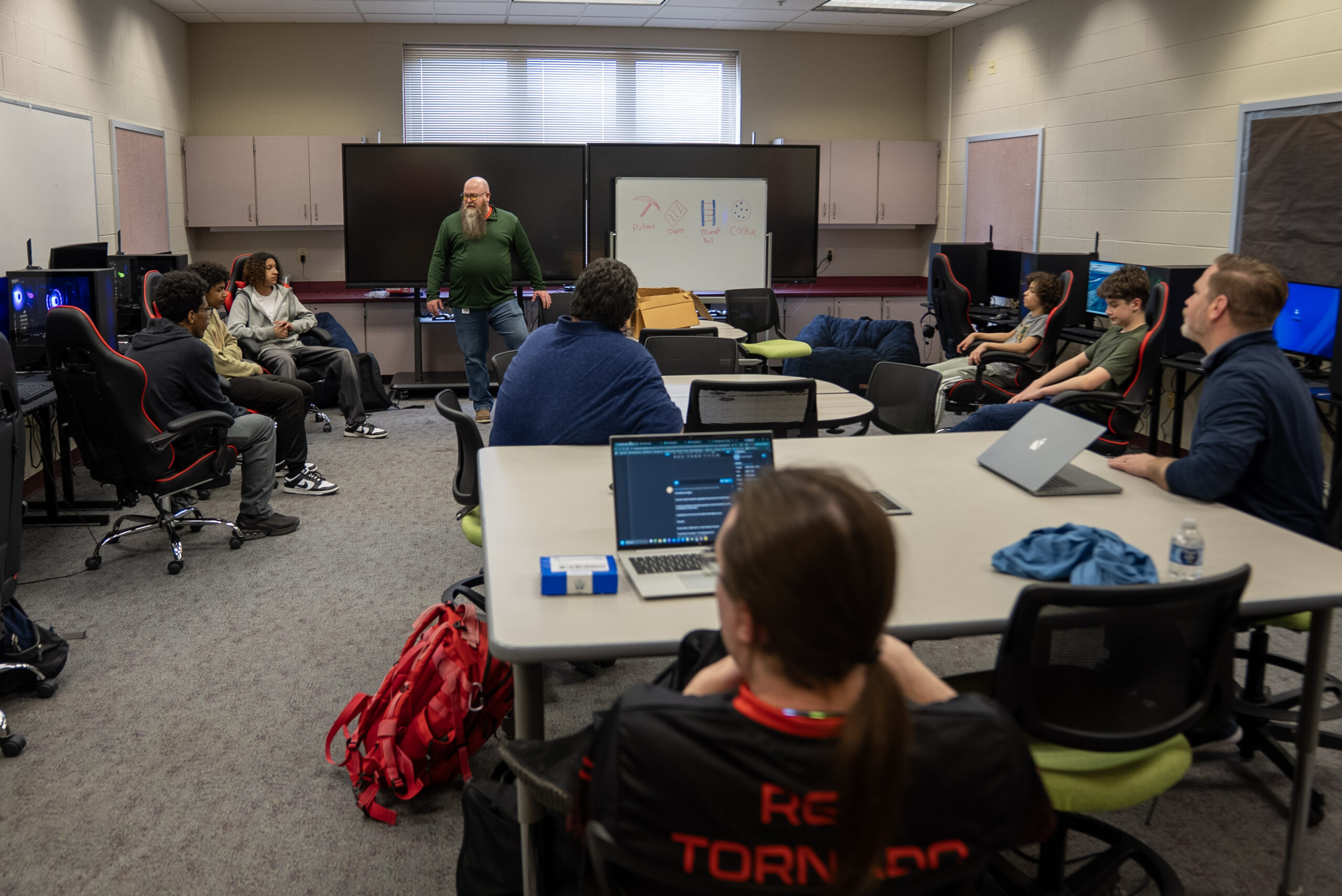
The team has also joined a scholastic eSports league, positioning McCaskey to compete with other districts and expand opportunities for students in the future.
That growth will take time, but the foundation is already there.
What stands out most is not the technology. Not the games. Not even the competition. It’s the environment.
A room filled with students who might not have otherwise crossed paths, working together as if they’ve always been part of the same team. Adults choosing to show up, not because they have to, but because they believe in what this space offers.
A program built on the idea that belonging shouldn’t be limited. And for the students at McCaskey, that sense of belonging is no longer a question. For more photos, visit us on Facebook.