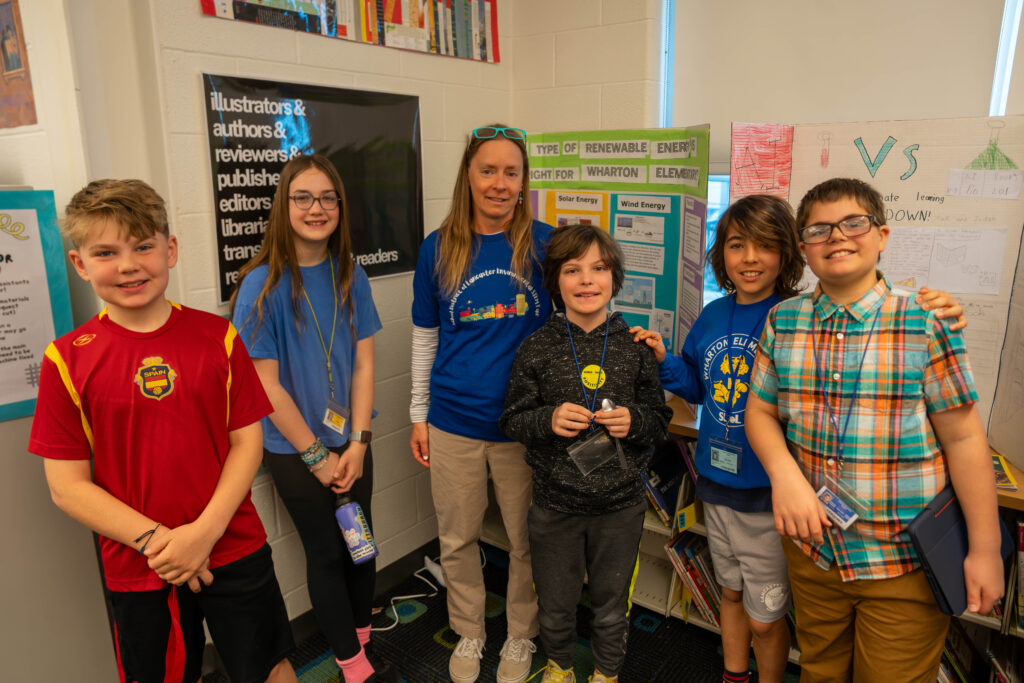
At Wharton Elementary School, the STEM Fair started with conversations. Before any project took shape, students gathered during early morning work sessions to talk through ideas with Karen Sandt, SEP Special Education Paraprofessional and Building Tech Contact.
“What inspires you?” she asked. “What are you curious about? What would you want to change?” They explored what mattered to them.
Those questions became the foundation for a STEM Fair that felt different this year. Without a districtwide STEM Fair this year to guide it, the focus shifted intentionally toward student voice and choice. 23 students across kindergarten through fifth grade stepped into that space, creating 17 projects that reflected both personal interests and a shared investment in their school community.
“We encouraged the students to create a project that would either help Wharton improve the school or something they were really interested in,” Sandt said. “A lot of them started with their own experiences and built from there.”
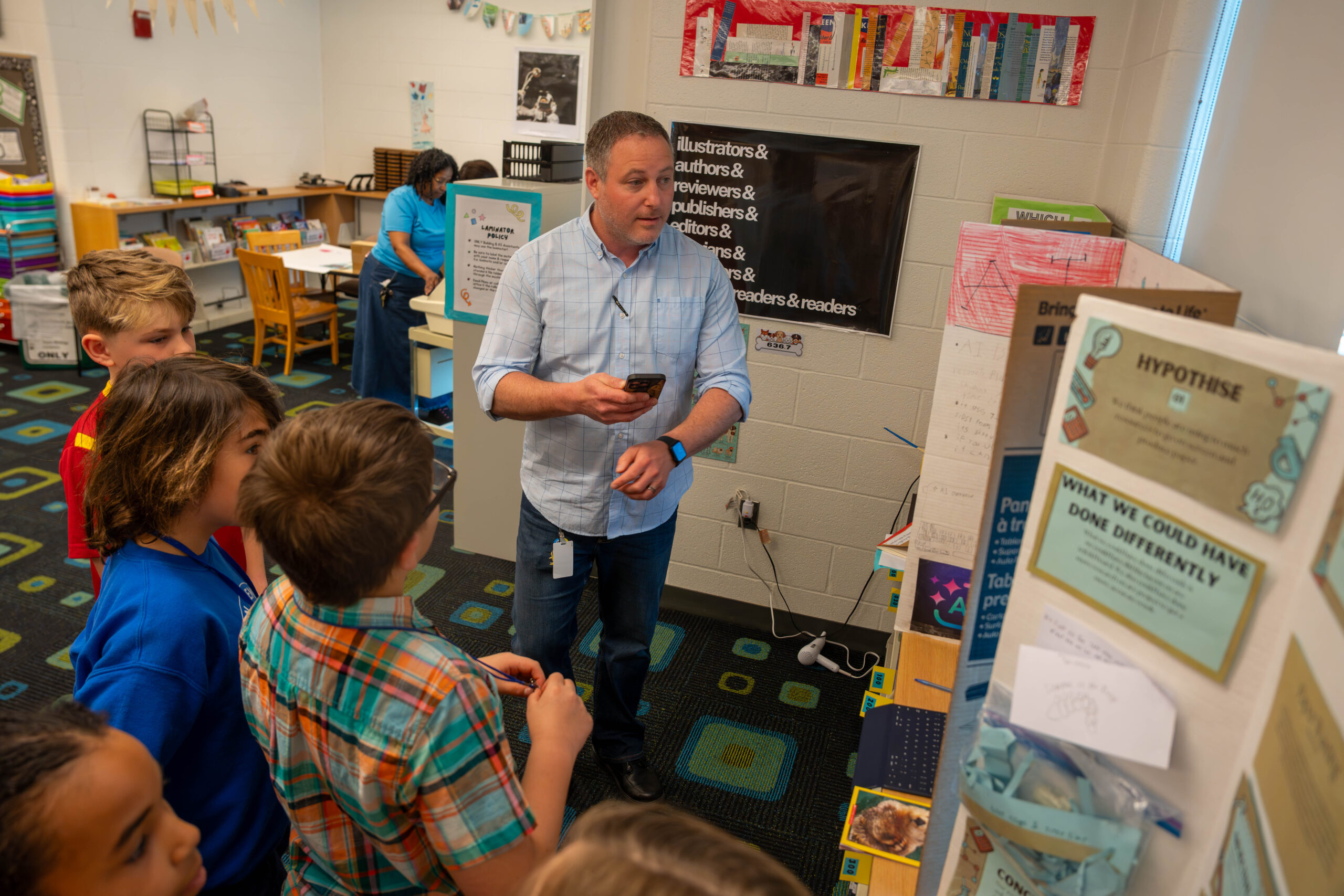
In the weeks leading up to the fair, students attended before-school work sessions where they explored ideas, discussed interests, and began shaping their projects. While some used tools like Science Buddies for structure, many simply followed their own questions, building projects rooted in what they noticed in their everyday lives.
That approach led to projects that didn’t just demonstrate scientific concepts. They asked real questions and proposed real solutions.
One of the most visible themes centered around biking to school. Students began by observing something simple. More and more of their classmates were riding bikes each day. But where were they all supposed to go? Through interviews and informal data collection, they discovered that on some days, nearly 90 students were biking to school.
That observation quickly turned into a design challenge. “How do we create enough space for that many bikes?” Sandt recalled students asking. “Could we add a scooter station? Could we add a fix-it station with air for tires?”
Multiple groups took on that question from different angles. Some focused on infrastructure and design. Others connected it to environmental impact.
Fifth grader Maya Iyengar brought both together. Her project explored air pollution and the role transportation plays in shaping it, while also proposing a more functional and accessible bike rack for Wharton.
“The informative part was about air pollution and how it’s getting worse,” Maya explained. “The action step was how a better bike rack could help our school and keep our air cleaner.” But for Maya, the impact went beyond the project itself.
“I love how kids can feel like they have a part in our community,” she said. “They can share their ideas and feel like they belong in making things better.”
That sense of ownership showed up across the fair. Fifth grader Alice Kindig continued her work on composting, building on a project she began in earlier grades. This year, she shifted her focus from home composting to a schoolwide solution, identifying both the environmental need and the practical opportunity within Wharton’s existing space.
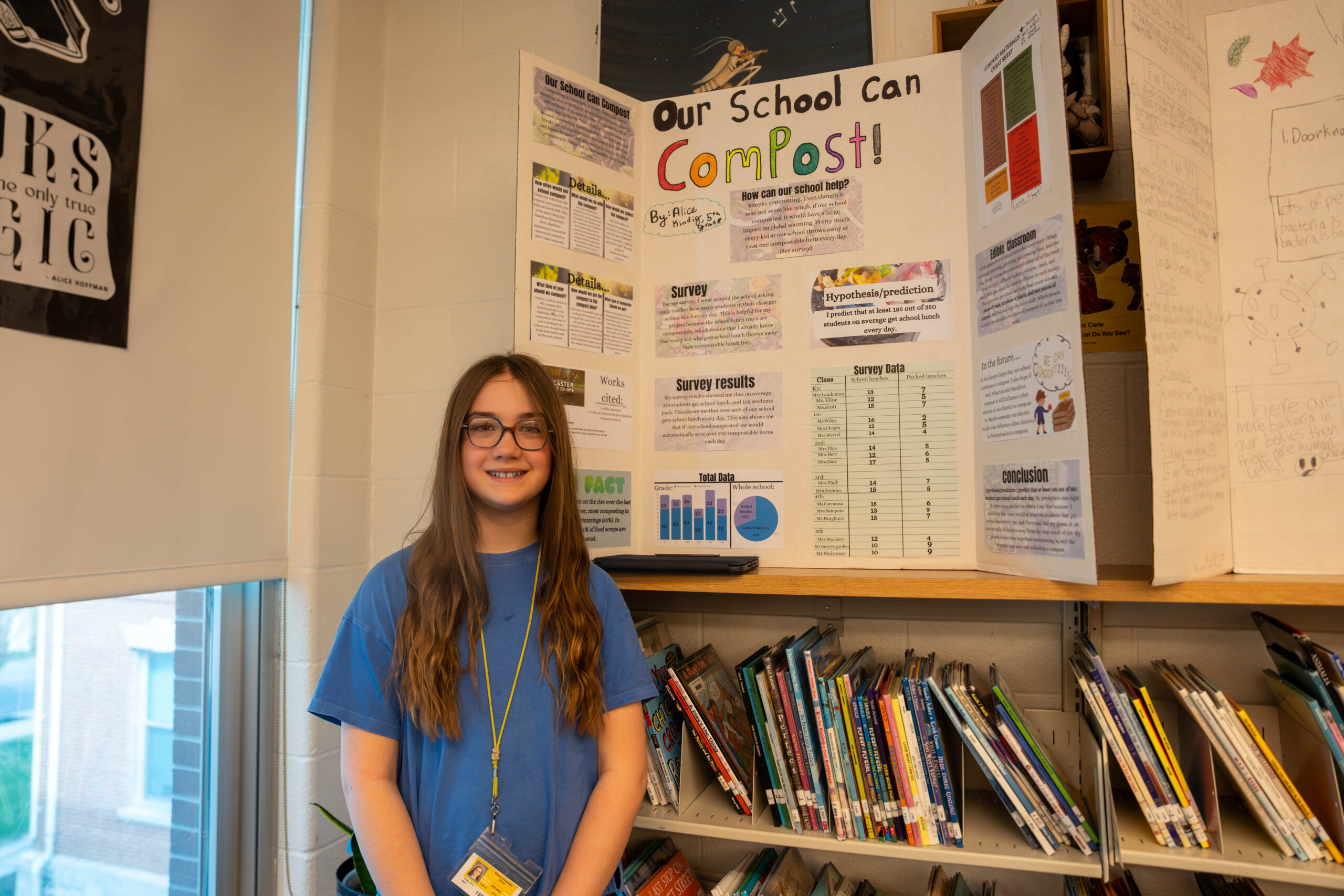
“This project shows how and why we can compost at Wharton,” Alice said. “We already have a composter, but it hasn’t been used in a long time. We could replace it with something better, like a three-bin system.”
Her work connected global issues like climate change to local action, showing how even small changes within a school community can contribute to a larger environmental impact.
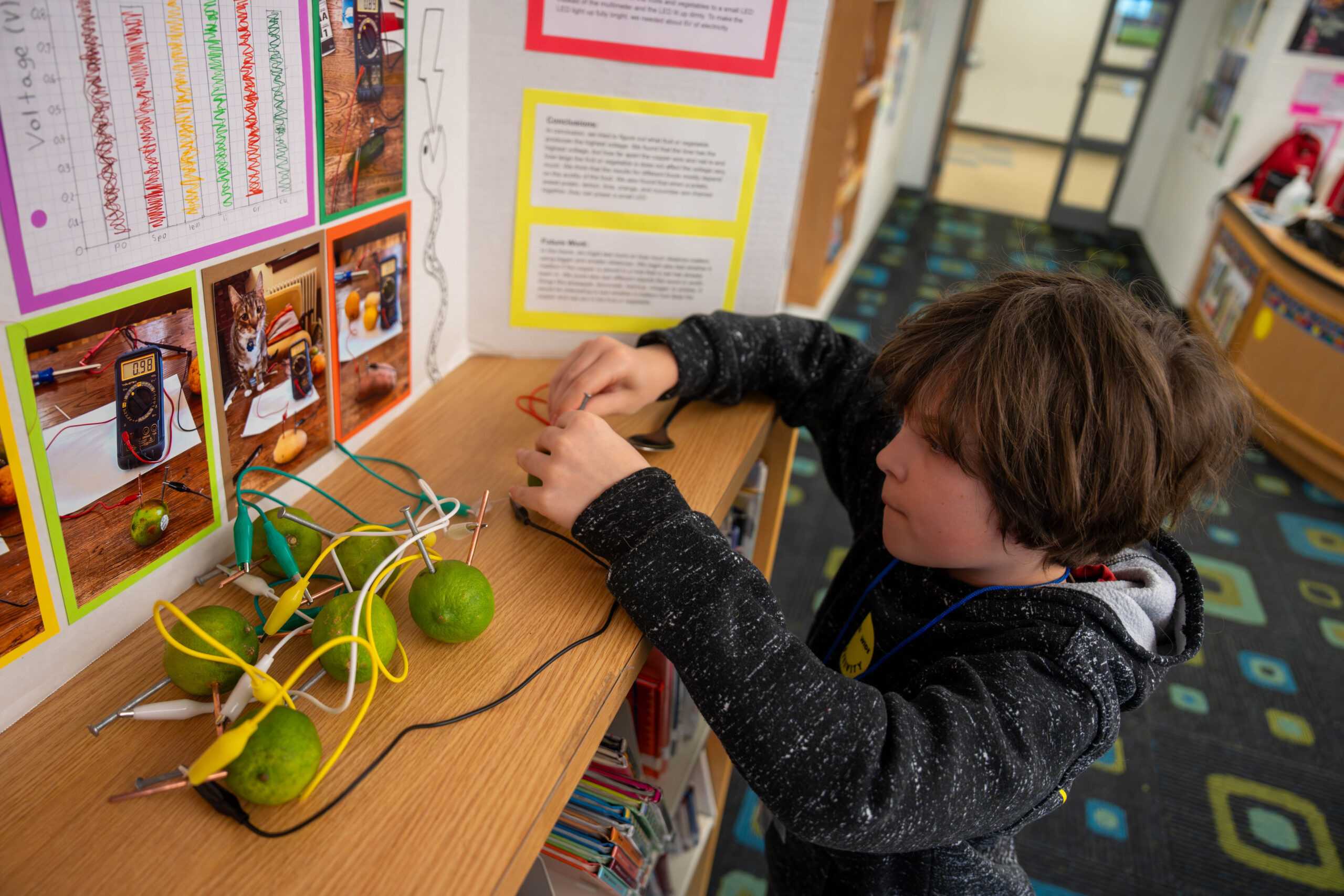
Other students explored sustainability through experimentation. Fourth grader Silas Trainor tested fruits and vegetables to determine which produced the most electricity, using copper wire, nails, and a multimeter to measure voltage.
“Lime had the highest voltage,” he shared. “It was fun to do something I enjoyed. And maybe we could make more eco-friendly batteries.”
That blend of curiosity and possibility carried through many projects.
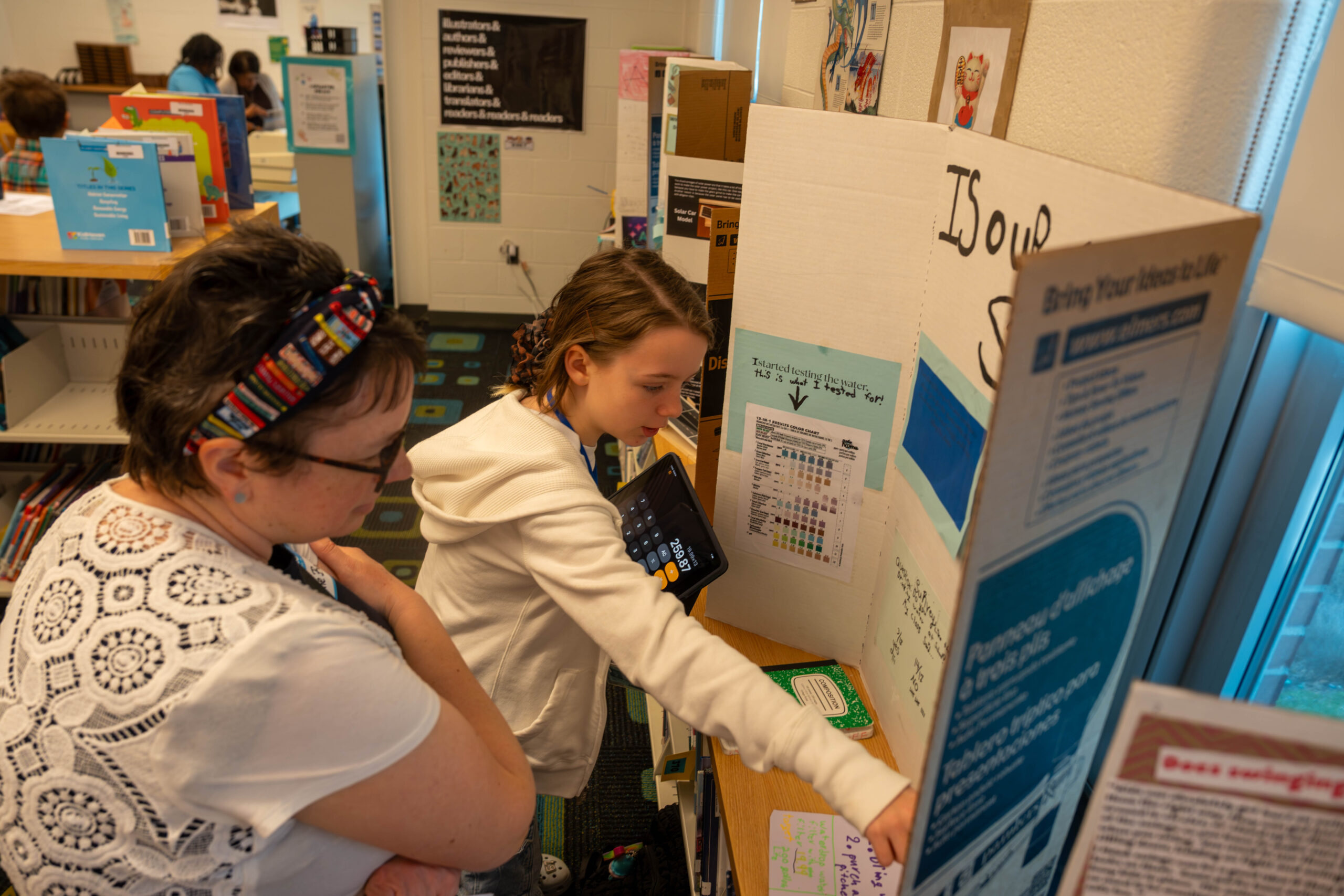
Students investigated water quality and how to remove harmful chemicals. They studied bacteria and how to reduce exposure to germs. They tested different cleaning solutions to determine which worked best on various surfaces. They explored light and refraction through rainbow experiments. They examined minerals, solar energy, and even the materials needed to build faster solar-powered cars.
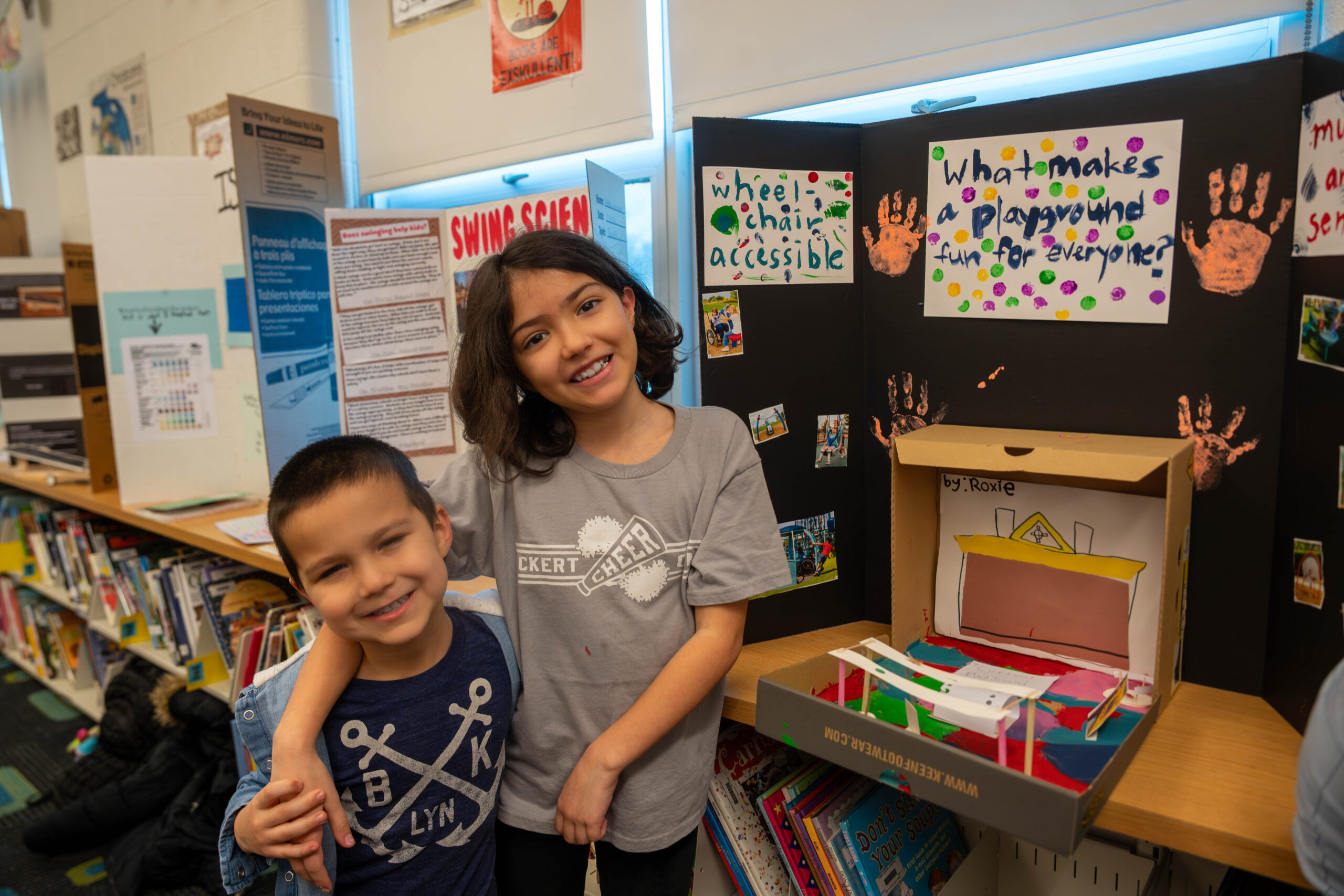
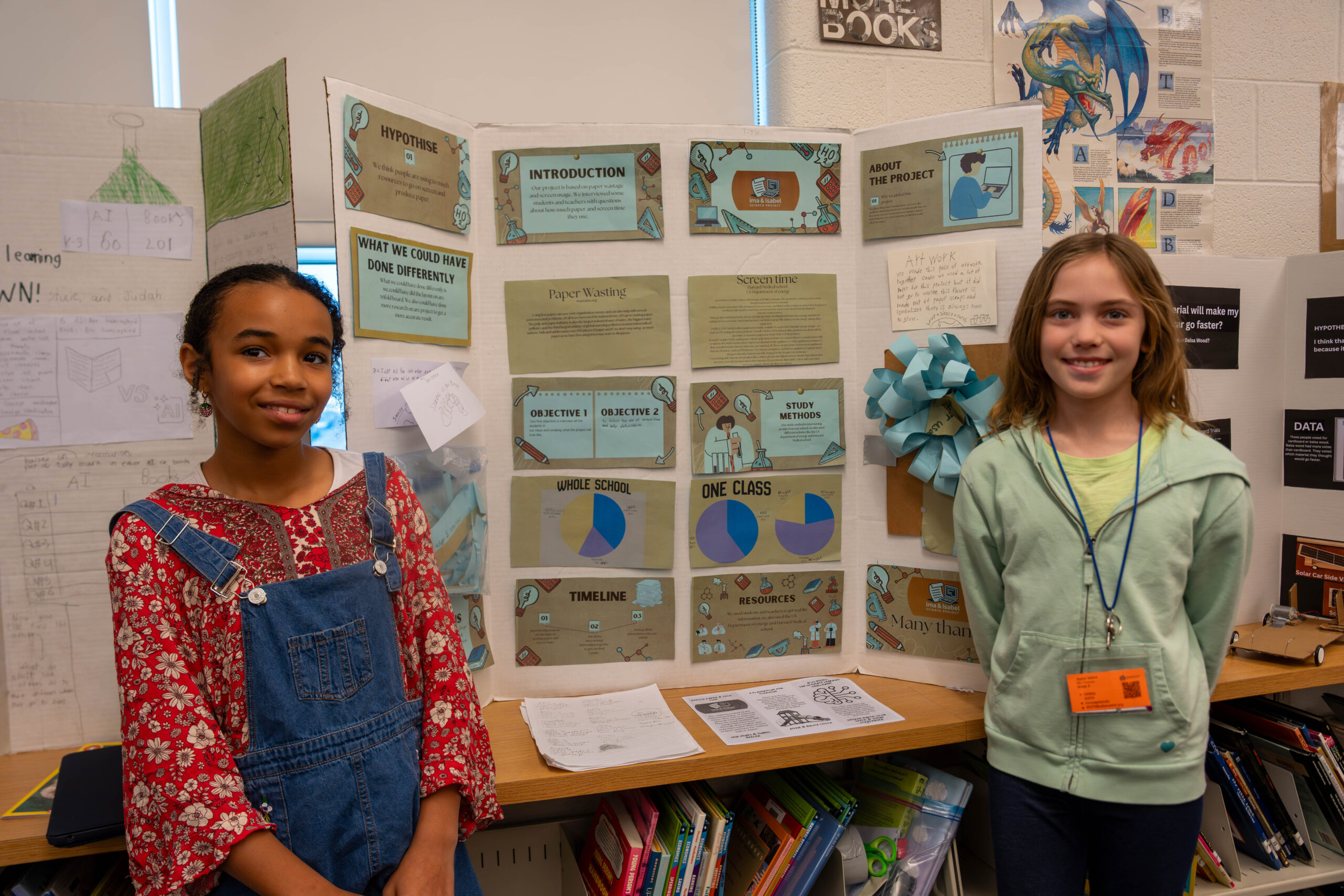
Some projects focused directly on improving student experience at school. One group interviewed classmates to better understand playground accessibility, asking how spaces could be designed to support all students. Another explored how adding swings could enhance play and inclusion. Others examined how reducing screen time and paper usage could support both environmental sustainability and student well-being.
Across every grade level, students weren’t just completing assignments. They were identifying problems, gathering information, and proposing solutions grounded in their own environment.
Adam Hess, the district’s secondary STEM instructional coach, saw that connection immediately during his visit.
“I was very impressed with the variety of topics that the kids engaged with,” he said. “What stood out most was how many of the projects were connected to the school community and how students were thinking about ways to improve their environment.”
That relevance is intentional. Across the School District of Lancaster, creating opportunities for hands-on, student-centered learning is a key priority. Experiences like the Wharton STEM Fair reflect a broader commitment to engaging students through real-world application, critical thinking, and creativity.
At Wharton, that commitment came to life in visible and meaningful ways. Younger students were introduced to the scientific process, learning how to ask questions and share their thinking. Older students built on those skills, applying research, data collection, and analysis to more complex ideas.
“I hope the younger students got a feel for what a science project entails,” Hess said, “and that older students can take what they learned and build on it in the future.”
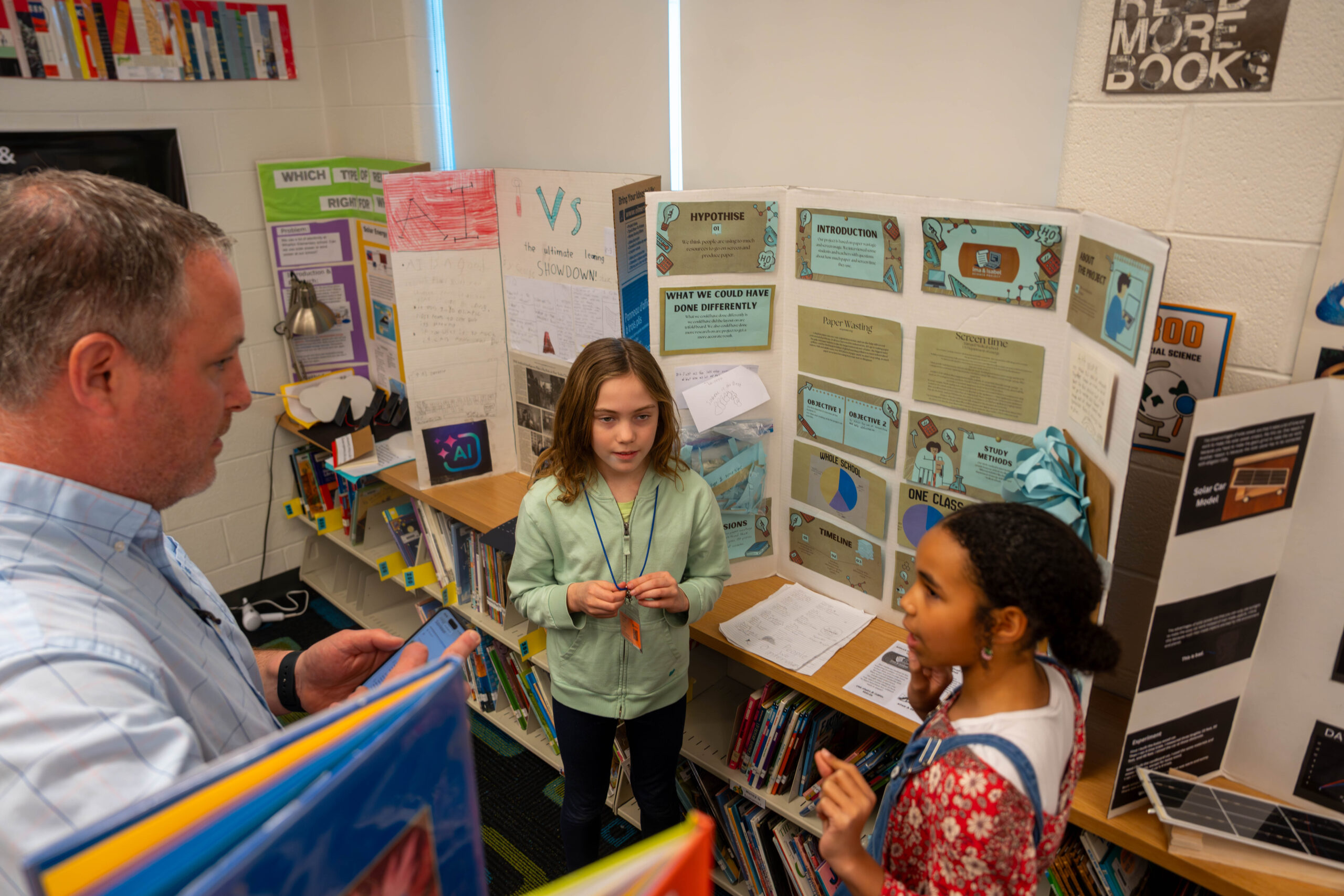
For Sandt, the impact was already clear in the everyday moments leading up to the fair. “They’re stopping me in the hallway,” she said. “They’re excited. They want to talk about their projects. It’s fun to come in each morning and see them putting everything together.”
That excitement carried into the event itself, where every participating student was recognized with support from the school’s PTO. Additional awards were given to top projects, including:
- 1st Place – Alice Kindig for her composting initiative
- 2nd Place – Silas Trainor for his electricity experiment
- 3rd Place – Hugo Driscoll and Bailey Benson for identifying the most effective cleaning solution.
But the lasting impact of the STEM Fair goes beyond recognition.
It lives in the confidence students built, the questions they asked, and the way they began to see themselves not just as learners, but as contributors. “If you’re a kid and you feel like you have nothing to do,” Maya said, “that’s not true. You have a part.”
At Wharton Elementary, students aren’t waiting to be told how to make a difference. They’re already leading the way.