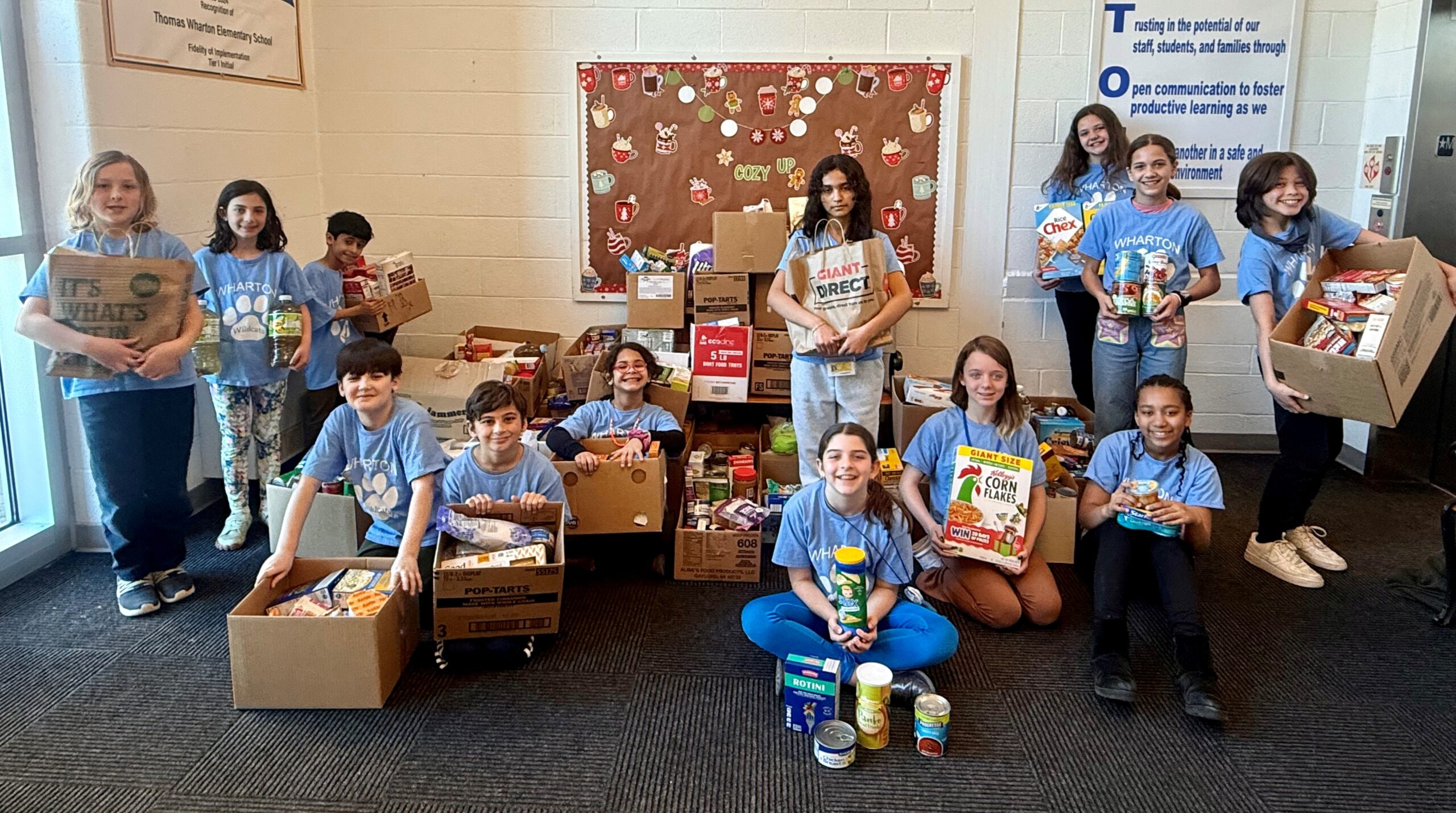
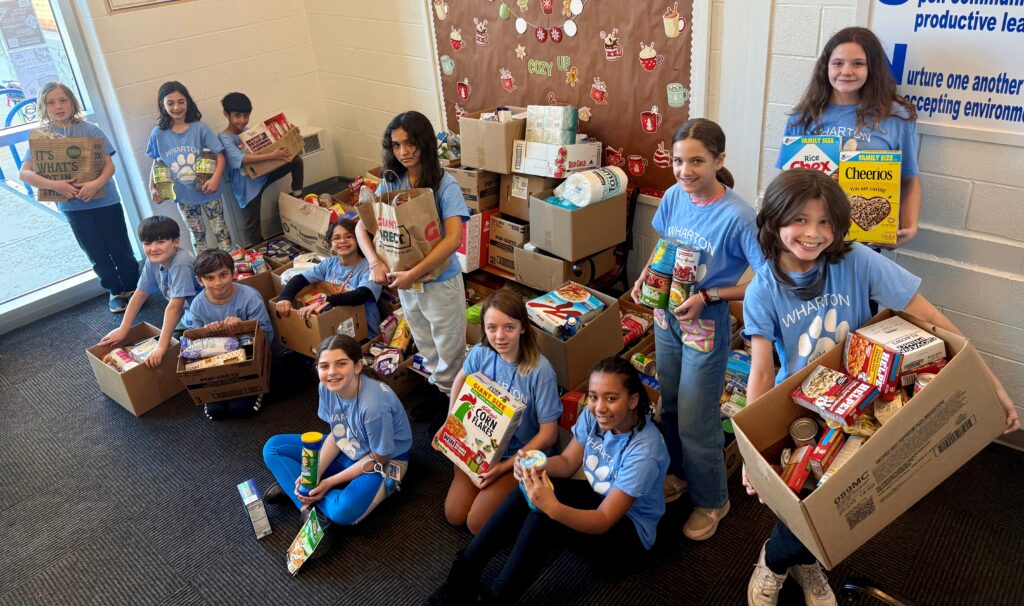
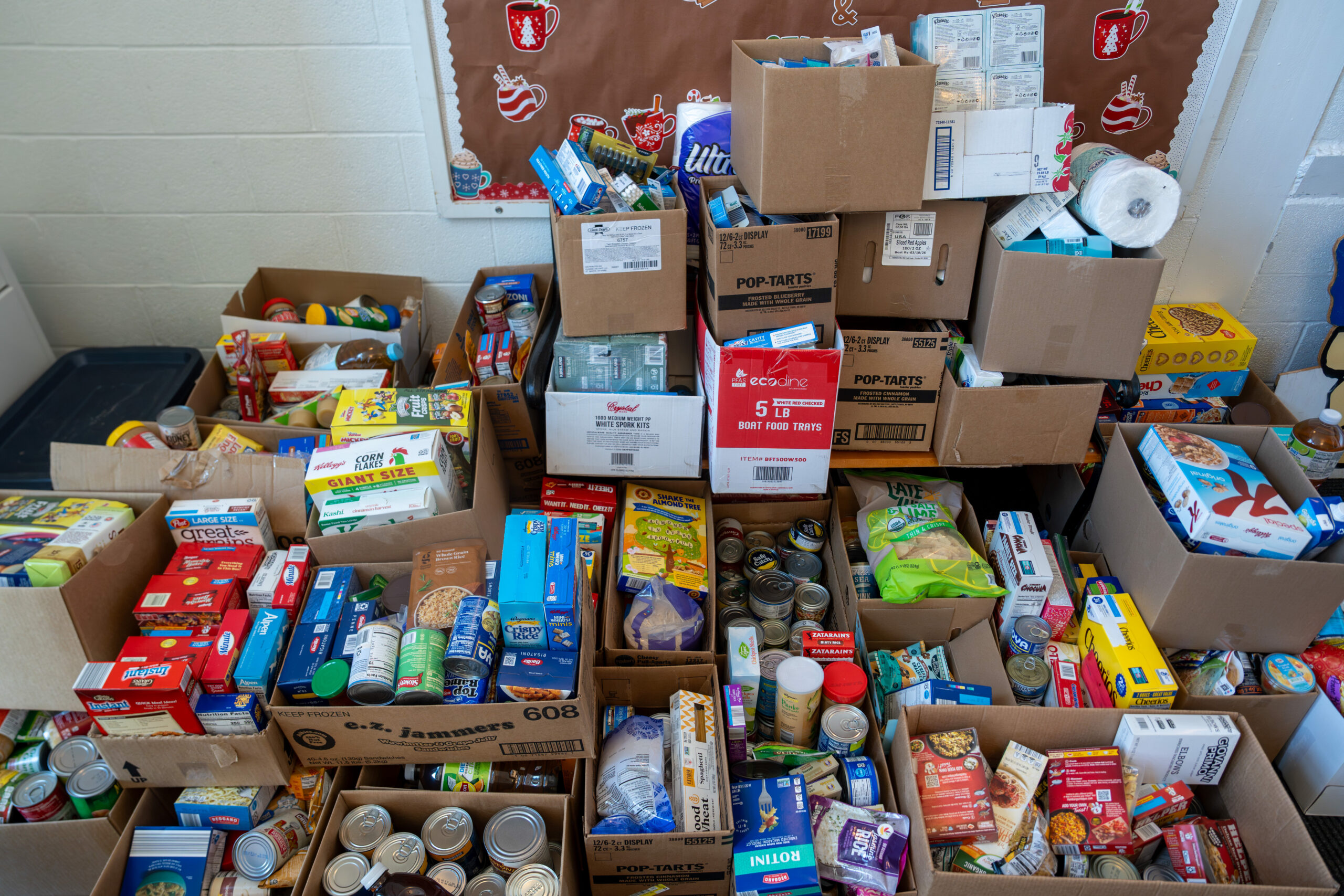
By the end of the week, the lobby at Wharton Elementary School had been transformed. What began as individual items carried in by students and families became something collective. Boxes lined the walls. Bags were stacked with intention. What had once been scattered across classrooms now sat together, representing a shared effort that had grown day by day.
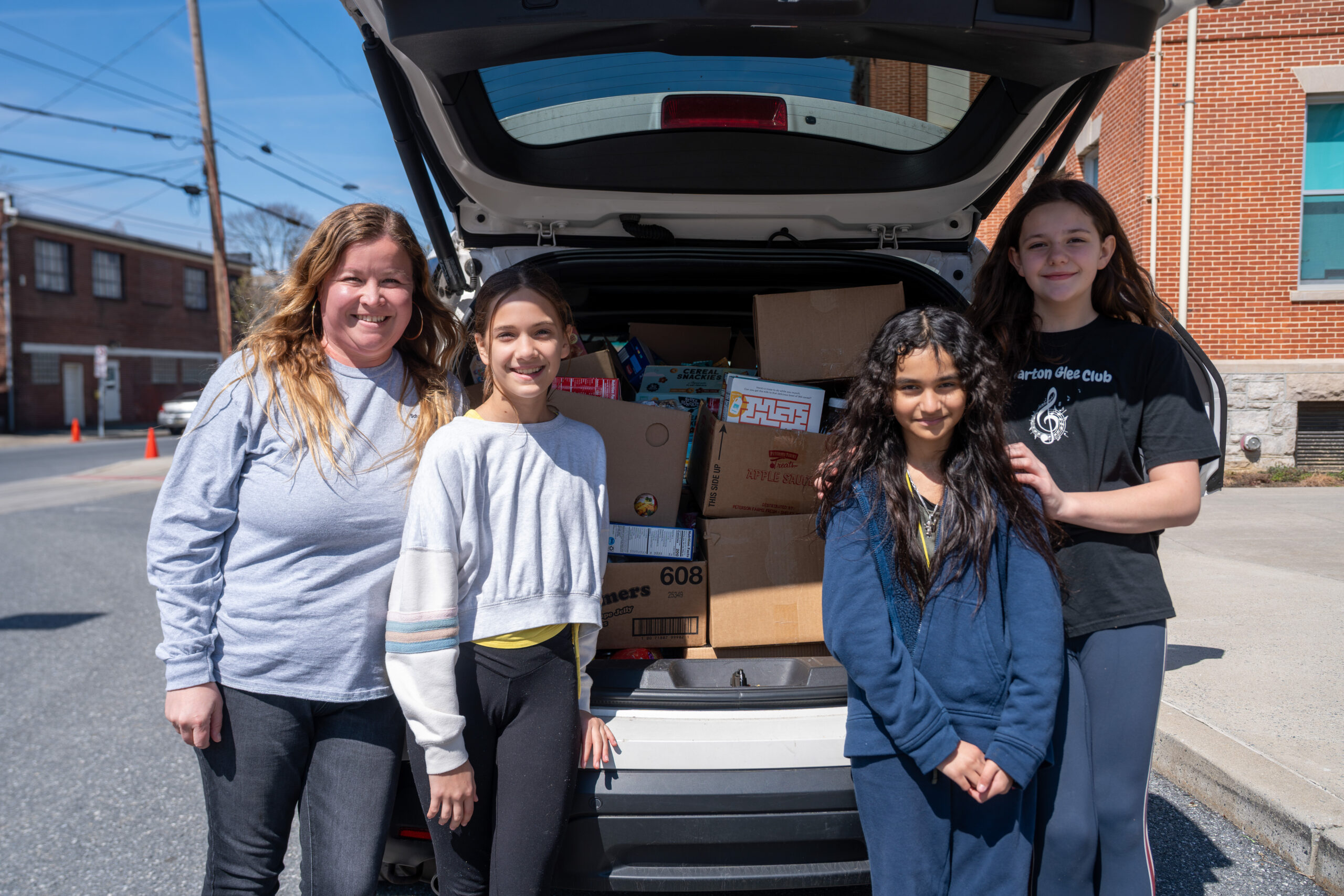
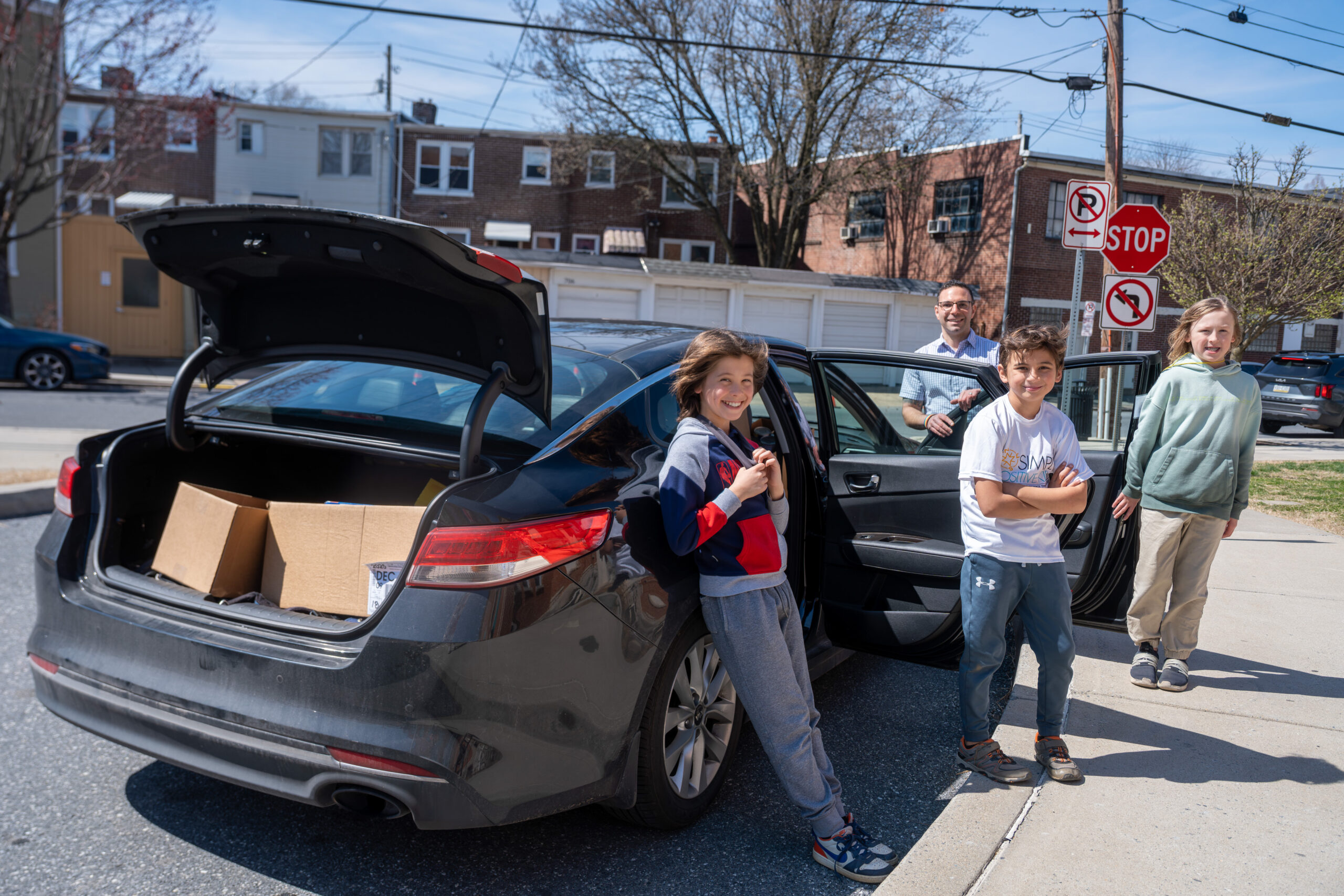
Outside, that effort continued as students watched hundreds of pounds of donations being loaded into cars, each item moving one step closer to the Lancaster County Food Hub.
In total, Wharton students and families collected 1,625 items, weighing approximately 900 pounds. It’s an increase from last year and a reflection of a tradition that continues to grow with each passing year.
But what stands out most isn’t the total. It’s how the work happened, and who made it happen.
This year, student leadership members in grades 3 through 5 helped lead the effort from the very beginning. Before the drive even started, they stepped into classrooms across the school during class meetings, introducing the initiative to their peers. They explained the purpose behind it, connected it to the school’s focus on leadership and service, and helped set the tone for what the week would become.
Throughout the week, those same students stayed deeply involved. Each afternoon, they moved from classroom to classroom, counting donations and tracking how each homeroom was contributing. Their work created a daily rhythm, helping build momentum and excitement while also keeping the entire school community informed through regular updates shared with families.
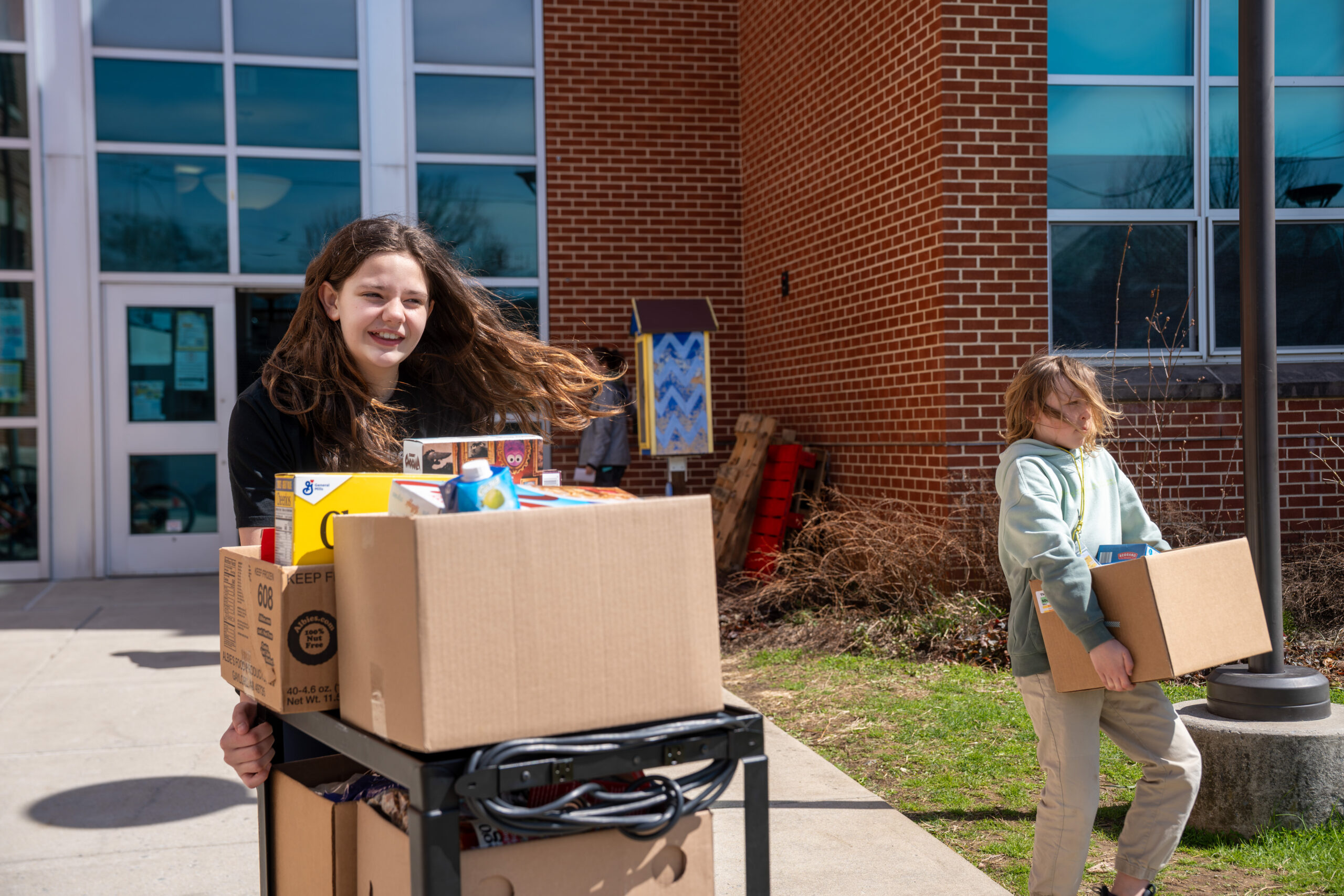
By the end of the week, student leaders helped bring everything together. They carried items down to the lobby, organized what had been collected, and prepared it for delivery. On the final day, fifth grade leaders were outside helping load donations into cars, seeing the full scope of what they had helped make possible.
For school social worker Talia Mylin, that level of student involvement is what makes the experience meaningful.
“This food drive means a lot to me as a social worker,” she said. “Just knowing the impact that our community resources and partners have on the families we serve, and being able to have our students be part of that, it really warms my heart.”
That connection between students and the broader community is intentional. It reflects a commitment to helping students understand that what they do inside school can have a real impact beyond it.
At Wharton, that understanding is built through experiences like this. School counselor Wayne Hooper helped lead the effort, connecting the food drive to the school’s Wildcat Mindsets for March, focused on leadership and service. The goal was not only to encourage students to give, but to help them understand why their contributions matter.
“The food drive came from that idea of showing service to our community,” Hooper said. “We based it off what the Food Hub actually needs, so students understood this wasn’t just about collecting items. It was about responding to real needs.”
Over time, the approach has continued to evolve.
“This is our third year doing it, and we get a little more every year,” he said. “Setting classroom goals, building excitement, and getting students involved in the process makes a difference. It helps them feel like they’re part of something bigger.”
That sense of ownership showed up clearly in how students talked about the experience.
Fifth grader Maya Iyengar described it as both meaningful and empowering.
“We’re helping out in the community, packing up food for people who maybe don’t have the chance to have it every day,” she said. “It makes me feel great that everyone can have a chance to participate and help.” For her, the importance of the effort connects to something fundamental.
“I feel like everyone should have the right to be equal. For people who can’t afford food every day, it’s great that we can help because we can.”
Samuel Gilbert shared a similar perspective, focusing on the impact of simply showing up for others. “It feels good because I get to help people who need food more than I do,” he said. “Some people aren’t as lucky as me. I get to have food every day, and some people don’t.”
For Cade Olejack, the experience brought a different kind of reflection. “To me, it feels kind of nice, and a little bit calming,” he said. “I don’t really do this stuff a lot, but I like it. It helps other people who need the food.”
After thinking about it, he added, “If their life is harder, this might make it a tiny bit better.”
That perspective reflects something deeper than the act of donating. It shows an understanding that even small actions can have real impact.
At the School District of Lancaster, preparing students for the future includes helping them develop that awareness. It means creating opportunities for students to practice leadership, to understand their role in a community, and to take action in ways that matter.