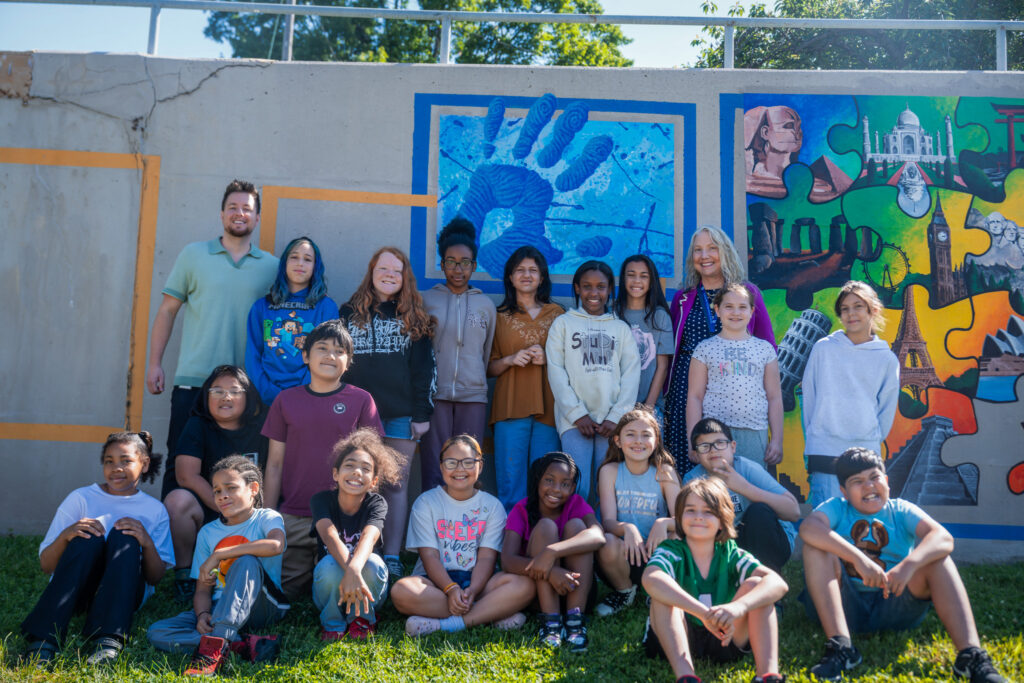
For the past ten years, a wall at Lafayette Elementary has quietly told the story of its students. Each year, a new mural is added, creating a growing collection of artwork shaped not by a single artist, but by the ideas, creativity, and collaboration of students. No two murals are alike. Each one reflects the students who created it and the conversations that unfolded throughout the school year.
This year’s mural may be the smallest in size, but it carries one of the biggest messages. Centered around the theme of diversity, the mural features a hand formed entirely from fingerprints. More than 400 Lafayette students contributed their fingerprints to the final piece, transforming individual marks into a single work of art.
From a distance, the mural appears to be a painted design. Up close, a different story emerges. Every detail is made up of hundreds of fingerprints, each one unique, each one belonging to a member of the Lafayette community.
The idea came from fifth-grade student Valentina Castillo. While brainstorming possibilities with classmates, Castillo suggested using fingerprints as the foundation for the mural. The idea immediately stood out. In ten years of mural projects, students had never explored fingerprints as a medium.
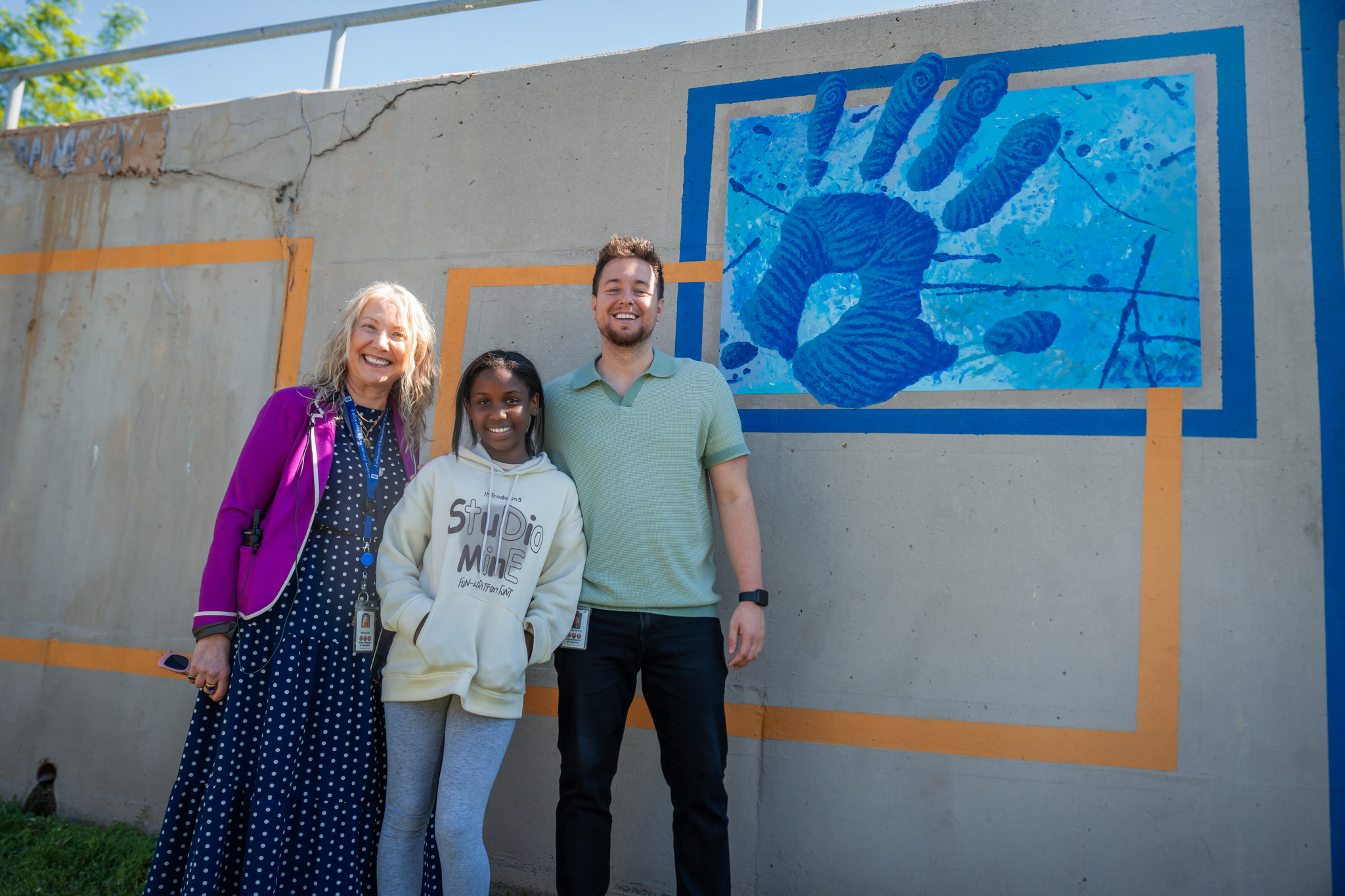
“I was looking at my fingerprint,” Castillo explained. “Mr. Blymire was showing us different pictures and ideas, and I thought, what if we did it with fingerprints? Wouldn’t that look cool?”
What began as a simple observation evolved into months of planning, discussion, experimentation, and collaboration.
Led by art teacher Wesley Blymire and his Advanced Art students, the project challenged students to think beyond traditional painting techniques. With a smaller mural space than previous years, students explored new ways to create impact. They discussed color schemes, composition, texture, and symbolism before ultimately deciding that fingerprints could represent something larger than art alone.
Students chose a monochromatic color palette, another first for Lafayette’s mural wall. They experimented with how fingerprints could create texture and movement while still forming a cohesive image. The final design became a powerful reflection of the school’s community.
“Diversity means being friends with people even though they’re different from me,” said Castillo.
Fourth-grade student Evelette Hirsch shared a similar perspective. “Diversity means accepting other people who are different from you,” she said.
Those ideas became the heart of the project. Over several weeks, Advanced Art students helped guide their classmates through the process. Students were brought into the art room, one table at a time, to carefully place their fingerprints along pre-drawn lines. Every student and their fingerprint was accounted for.
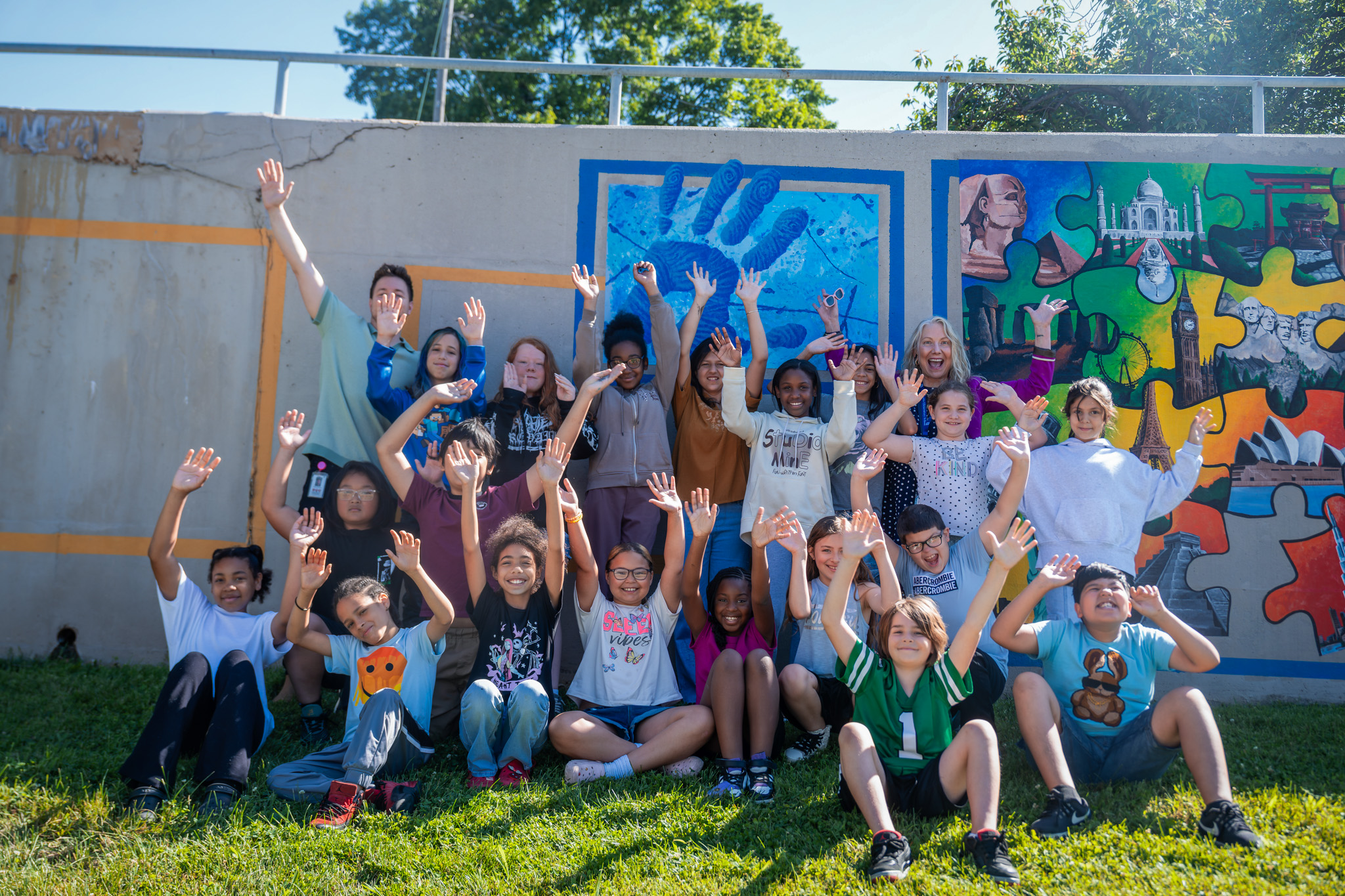
Tracking down hundreds of students throughout the school year became a project in itself. Some students were absent on fingerprint days and had to return later. One student who had been absent for several days returned on the morning of the unveiling and added one of the final fingerprints as the mural was being installed.
“He got to stand back and see the finished piece,” Blymire said. “It was cool to watch him realize, ‘Wow, I helped make that.'”
That sense of ownership was woven throughout the project. As the mural took shape over the course of the school year, students could see their individual contribution become part of something shared by the entire school community.
The project also reflects the learning that happens every day at Lafayette. Throughout the process, students practiced problem-solving, collaboration, planning, communication, and creative thinking. They learned how to develop an idea, test possibilities, revise their thinking, and work together toward a shared goal.
For Blymire, that journey is the most rewarding part. “I love just being there to bring the students’ ideas to life,” he said. “That’s always been the best part of it. I’m just there to listen to them.”
The mural may now hang permanently on Lafayette’s wall, but its story belongs to the students who created it. More than 400 fingerprints came together to create a single image. Individually, each mark is unique, much like the Lafayette community itself.